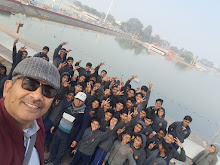
- पंचकूला: पंचकूला सेक्टर-5 के दशहरा ग्राउंड में भारत सरकार के विज्ञान एवं प्रौद्योगिकी मंत्रालय द्वारा आयोजित इंडिया इंटरनेशनल साइंस फेस्टिवल (आईआईएसएफ) वर्ष 2025 होने जा रहा है. ये आयोजन 6 से 9 दिसंबर तक चलेगा. यह पहली बार है जब यह प्रतिष्ठित आयोजन उत्तर भारत में किया जा रहा है.
- इसरो-डीआरडीओ के वैज्ञानिक होंगे शामिल: इस कार्यक्रम में भारत के विभिन्न राज्यों से हजारों छात्र, युवा शोधकर्ता और विज्ञान प्रेमी भाग लेंगे. साथ ही इसरो, डीआरडीओ एवं अन्य अग्रणी वैज्ञानिक संस्थान के वरिष्ठ वैज्ञानिक और शोधकर्ता भी अपनी उपस्थिति दर्ज कराएंगे, जो विभिन्न सत्रों एवं संवाद कार्यक्रमों में सहभागिता करेंगे.
- विज्ञान से समृद्धि थीम: ईआईएसएफ 2025 का 11वां संस्करण "विज्ञान से समृद्धि आत्मनिर्भर भारत के लिए" थीम पर आयोजित किया जा रहा है. इस फेस्टिवल का उद्देश्य भारत को विज्ञान और नवाचार आधारित राष्ट्र के रूप में विकसित करने की दिशा में हो रहे प्रयासों को प्रदर्शित करना है. कार्यक्रम में भव्य एग्जीबिशन, थीमैटिक कॉनक्लेव, स्टार्टअप शोकेस, छात्रों और वैज्ञानिकों के बीच संवाद सत्र और राष्ट्रीय आवश्यकताओं के अनुरूप विभिन्न पब्लिक आउटरीच गतिविधियां शामिल होंगी.
- विज्ञान में रूचि और नवाचार प्रोत्साहन उद्देश्य: डिया इंटरनेशनल साइंस फेस्टिवल का उद्देश्य आम जनता में विज्ञान के प्रति रुचि बढ़ाना, नवाचार को प्रोत्साहित करना और युवाओं को विज्ञान एवं प्रौद्योगिकी के क्षेत्र में योगदान देने के लिए प्रेरित करना है. source:आईआईएसएफ 2025: पंचकूला में इंडिया इंटरनेशनल साइंस फेस्टिवल कल से, इसरो–डीआरडीओ के वैज्ञानिक और हजारों छात्र होंगे शामिल
LIB
- HOME- LIB-BLOG
- E BOOKS
- E MAGAZINES
- E-NEW PAPERS
- LIBRARY
- MAG-SUBSCRIPTION
- STD-ORIENTATION
- BEST SCHOOL4MY KIDS
- KVS ADMISSIONS
- KVS CIRCULARS
- ABOUT KVS
- JAGO GRAHAK
- CAREER-SIKSHA
- LIB. ANNUAL REPORT
- VICKAS -YOUTUBE
- SUGAMAYA
- OLD Q.P. OLYMPIADS
- BHARAT KOSH
- NMEICT
- APAAR
- NASA
- SATHEE-GK & Current Affairs
- ONLINE BOOK REVIEW
- DIGITAL VOCATIONAL BOOKS
- DIKSHA
- NISTHA
- SCHOLASTIC WORLD
- CALCULATOR
- KVS LIB POLICY 2012
- LIB GUIDELINES KVS-2015
- NCERT AUDIO TEXT BOOKS
- PROJECT INCLUSION
- SAMAGAM-KVS
- PIMS-KVS
- LIB ANNUAL REPORT 2023-24
- EG 4.0 LIB. OPAC
- EG 4.0 LOG IN
- EG 4.0 DIGITAL LIB.
- EG 4.0 KV CLUSTER-3
- EG 4.0 MOB. APP
- URKUMD
- DrillBit
- SIP - SWOT
- UBI FEE PORTAL
- KV OCF-29- CHD BLOG -2
- INNOVATIVE PROJECT BY LIB
- BLOGGING
- READING PROMOTION
- SEARCH JOBS
- MY CAREEER ADVISOR APP
- NOBEL PRIZE
- MIN. OF EDUCATION
- LIB AT A GLANCE
- KVS ZIET FOLK TALES MM
- ALL AI TOOLS
Search This Blog
Friday, 5 December 2025
IISF 2025 Panchkula
BLOG FOCUS-
COUNTRY FIRST,HEALTH & HYGIENE,GRATITUDE / VALUES, NOTHING IS FREE (work Hard) ENVIRONMENT, ROAD SAFETY & TRAFFIC RULES, LANGUAGE, SCIENTIFIC TEMPERAMENT & LIFE SKILLS.
Thursday, 4 December 2025
Parts of a Magazine-The Anatomy of a Magazine
- Art
- In magazine design and layout, all photographs, illustrations, and graphics are all art.
- Backbone / Spine
- Where magazine pages are bound (glued, stapled, stiched).
- Baseline
- The baseline is the line upon which characters sit, and below which extenders extend (letters like lower-case p and q have extenders). Columns of text on a magazine page will often share a commomn baseline.
- Bleed
- Bleed is the overlap of content over the trim line. The bleed is cut away in the trimming process, and ensures that content goes right to the edge in the finished product.
- BOB
- Back of book.
Back of book content tends towards reader-engagement. This is where surveys, puzzles, quizzes, product reviews, user submitted content, and the like are most often published. Back of book is also where smaller format advertising is common.- Body
- Most text in a magazine is in the same font, size and leading, this text is referred to as the body.
- Byline
- The byline is the line stateing who the piece is by.
- Callout / Callout Box
- Callout is is used to describe both a piece of graphically attached to a graphic explaining some aspect of, as well as a piece of text from the nearby body, displayed as at a larger size to emphasize the point.
- Caption
- A caption is a short line of text descibing a photograph or other image.
- Centerfold / Center Spread (UK)
- The name comes from the middle fold of a magazine, the middle, where the stiching/staples go in a traditionally bound print magazine, but centerfold and center spread both refer to the content of those central pages.
- Cover
- Usually refers to a magazine's front cover - the face of the magazine. The cover is what readers see first. Good covers sell issues. Good issues sell subscriptions, and a satisfied subscriber will re-up, and in digital, buy back issues.
- Cover Date / Pull Date
- The cover date is the date printed on the cover of the magazine. While that seems rather obvious, it is not the actual date of publication. In the US, Canada, and UK the cover date is often several weeks to several months in the future of the publication date. Also known as the pull date, the cover date tells retailers when they can start pulling issues off the shelf to return for refund.
The cover date also serves to preserve an appearance of fresh content, increasing the shelf life of each issue.- Credit
- Credit is a small caption published alongside art to give credit to the artist. Credit for several pieces can be given in in a single, larger credit line. Example: "Photographs by Annie Leibovitz."
- Crop Marks / Trim Marks
- Marks showing where printed magazine pages will be cut once bound.
- Cutline
- A cutline is similar to a caption, but discusses the content in more detail. For the following, Scientific American could have chosen to caption the photo simply "Light Polution," but instead chose to use a cutline discussing the issue. Some magazines choose to use both captions and cutlines.
- To read full article CLICK HERE
Learn the Basics of Magazine Publishing with Workshop Wednesdays!
Free Sessions: New Topic Every Wednesday
- Sourcing (great!) content
- Choosing the right topics
- Mastery of your editorial calendar
- Monetization
- Success in the App & Play Stores
- Pre-Launching: What to do before you go live
- Promoting your magazine on a budget
- Your Editorial Promise
Register Here
Next session:
December 3, 2025, 9AM PSTContact us Postal:
MagCast
27068 La Paz Rd
#129
Aliso Viejo CA 92656
USAPhone
888.876.8586
Mon – Fri
9:00 AM – 6:00 PM (PST)
BLOG FOCUS-
COUNTRY FIRST,HEALTH & HYGIENE,GRATITUDE / VALUES, NOTHING IS FREE (work Hard) ENVIRONMENT, ROAD SAFETY & TRAFFIC RULES, LANGUAGE, SCIENTIFIC TEMPERAMENT & LIFE SKILLS.
Parts of a Book
The main parts of a book are the front matter (everything before the main text), the body (the main content), and the back matter (everything after the main text).
📖 Detailed Breakdown of Book Parts
1. Front Matter (Before the Main Text)
This section introduces the book and provides essential information:
Cover – Includes the title, author’s name, and design to attract readers.
Title Page – Displays the book’s title, subtitle, author, and publisher.
Copyright Page – Contains copyright notice, ISBN, edition, and publication details.
Dedication – A short note dedicating the book to someone special.
Foreword – Written by someone other than the author, giving credibility or context.
Preface/Introduction – Author’s own words about why the book was written.
Table of Contents – Lists chapters and page numbers for navigation.
2. Body (Main Content)
This is the heart of the book:
Chapters/Sections – Organized divisions of the main narrative or subject matter.
Prologue (in fiction) – Sets the stage before the main story begins.
Text/Story – The actual content, whether fiction, nonfiction, or academic.
Illustrations/Graphs – Supporting visuals, especially in textbooks or children’s books.
3. Back Matter (After the Main Text)
This section provides references, notes, or additional material:
Epilogue – Wraps up the story or provides closure.
Appendix – Extra information, charts, or data not included in the main text.
Glossary – Definitions of key terms used in the book.
Bibliography/References – Sources cited or recommended readings.
Index – Alphabetical list of topics with page numbers for quick lookup.
Acknowledgments – Author thanks contributors, editors, or supporters.
Endnotes/Footnotes – Detailed notes or citations for specific parts of the text.
🧐 Why These Parts Matter
Front matter helps readers understand the book’s purpose and credibility.
Body delivers the main knowledge or story.
Back matter supports deeper study, reference, or closure.
BLOG FOCUS-
COUNTRY FIRST,HEALTH & HYGIENE,GRATITUDE / VALUES, NOTHING IS FREE (work Hard) ENVIRONMENT, ROAD SAFETY & TRAFFIC RULES, LANGUAGE, SCIENTIFIC TEMPERAMENT & LIFE SKILLS.
MAGAZINE VS NEWPAPERS
A newspaper is a daily or weekly publication focused on timely news and current events, while a magazine is a weekly or monthly publication that offers in-depth articles, features, and visuals on specific topics like fashion, science, or lifestyle.
📰 Newspaper vs. 📖 Magazine: Key Differences
| Attribute | Newspaper | Magazine |
|---|---|---|
| Frequency | Published daily or weekly | Published weekly, monthly, or quarterly |
| Content Focus | Breaking news, politics, local/national/international events | Specialized topics (fashion, sports, science, lifestyle, entertainment) |
| Article Length | Short, concise, factual reports | Longer, detailed, analytical, or narrative articles |
| Visuals | Few images, mostly black-and-white photos | High-quality, glossy images, colorful layouts |
| Audience Purpose | To inform readers quickly about current happenings | To entertain, inspire, or provide deeper knowledge on chosen subjects |
| Material | Printed on thin, inexpensive newsprint paper | Printed on glossy, durable paper |
| Timeliness | Highly time-sensitive, often discarded after a day | Less time-sensitive, often kept for reference or collection |
Sources:
🧐 Contextual Notes
Newspapers: Examples include The Times of India, The New York Times, The Guardian. They prioritize speed and breadth of coverage.
Magazines: Examples include National Geographic, Vogue, Sports Illustrated. They emphasize depth, design, and niche interests.
⚠️ Trade-offs & Considerations
Timeliness vs. Depth: Newspapers excel at immediacy, while magazines provide deeper exploration.
Cost vs. Quality: Newspapers are cheaper and disposable; magazines are more expensive but visually appealing.
Cultural Role: Newspapers shape public opinion daily; magazines influence trends and specialized communities over time.
BLOG FOCUS-
COUNTRY FIRST,HEALTH & HYGIENE,GRATITUDE / VALUES, NOTHING IS FREE (work Hard) ENVIRONMENT, ROAD SAFETY & TRAFFIC RULES, LANGUAGE, SCIENTIFIC TEMPERAMENT & LIFE SKILLS.
BOOK VS MAGAZINE
A book is usually a long, bound work focused on a single narrative or subject, while a magazine is a shorter, regularly published collection of articles on various topics, often tied to current trends or events.
📚 Key Differences Between a Book and a Magazine
| Attribute | Book | Magazine |
|---|---|---|
| Format | Bound with a durable cover, often hardcover or paperback | Stapled or perfect bound, thinner and less durable |
| Content | Longer, in-depth narratives or focused informational content | Shorter articles, interviews, images, and diverse topics in one issue |
| Frequency | Published irregularly (once, or in editions over years) | Published regularly (weekly, monthly, quarterly) |
| Purpose | Designed for long-term enjoyment, study, or reference | Focused on current events, trends, entertainment, or lifestyle |
| Longevity | Often kept in personal libraries or collections | Typically discarded or recycled after reading |
| Audience Use | Readers invest time for deep reading or study | Readers skim for quick updates, entertainment, or inspiration |
Sources:
🧐 Contextual Notes
Books: Examples include novels, textbooks, biographies, or encyclopedias. They are meant to be read over time and often have lasting value.
Magazines: Examples include National Geographic, TIME, or Vogue. They are designed to be consumed quickly and replaced by the next issue.
⚠️ Trade-offs & Considerations
Depth vs. Variety: Books provide depth on one subject, while magazines offer variety but less detail.
Durability vs. Timeliness: Books are durable and timeless; magazines are timely but disposable.
Cultural Role: Books often shape long-term knowledge and culture, while magazines capture snapshots of trends and public opinion at a given time.
BLOG FOCUS-
COUNTRY FIRST,HEALTH & HYGIENE,GRATITUDE / VALUES, NOTHING IS FREE (work Hard) ENVIRONMENT, ROAD SAFETY & TRAFFIC RULES, LANGUAGE, SCIENTIFIC TEMPERAMENT & LIFE SKILLS.
BHASHA SANGAM-2025
📌 1. 04 दिसंबर 2025 Language Tree Display & Language Heritage Wall
कैसे करें?
- Language Tree Display
- विद्यालय के किसी प्रमुख स्थान (प्रवेश द्वार, हॉल, कॉरिडोर) पर बड़ा-सा "भाषा वृक्ष" बनाया जाए।
- शाखाओं पर भारत की विभिन्न भाषाओं के नाम, लिपियाँ और नामों का अर्थ लगाया जाए।
- बच्चे पत्तियों पर अपनी मातृभाषा में एक शब्द, कहावत या वाक्य लिखकर पेड़ पर चिपकाएँ
- Language Heritage Wall
- एक दीवार इस उद्देश्य से चुनी जाए और उसे “भाषा विरासत दीवार” बनाया जाए।
- दीवार पर विभिन्न भाषाओं की लिपियाँ, प्रसिद्ध रचनाएँ, कवियों के नाम, अंचल की बोलियाँ प्रदर्शित की जाएँ।
- बच्चे अपनी-अपनी भाषाएँ और उनसे जुड़ी छोटी जानकारी जोड़ सकते हैं।
📌 2. 05 दिसंबर 2025 – Poetry Across Languages & Music Through Languages
कैसे करें?
- Poetry Across Languages
- बच्चों को समूहों में बाँटें और प्रत्येक समूह को किसी भाषा में कविता प्रस्तुत करने का मौका दें।
- कविता अपनी मातृभाषा, हिंदी, अंग्रेजी या किसी भारतीय भाषा में हो सकती है।
- छोटे बच्चों के लिए आसान कविताएँ चुनें और आवश्यकता हो तो शिक्षक अर्थ समझाएँ।
- Music Through Languages
- विभिन्न भाषाओं के लोकगीत, स्वागत गीत, बालगीत या शास्त्रीय रचनाएँ प्रस्तुत करें।
- संगीत शिक्षक बच्चों को अलग-अलग भाषाओं में सुरों का अनुभव कराएँ।
- एक छोटा “बहुभाषी संगीत कोना” भी बनाया जा सकता है।
📌 3. 06 दिसंबर 2025 – Festivals of Many Tongues & Voice of Language Podcast
कैसे करें?
- Festivals of Many Tongues
- भारत के विभिन्न राज्यों के त्योहार—जैसे ओणम, बिहू, पोंगल, बैसाखी, लोहड़ी—की प्रस्तुति।
- बच्चे पोस्टर बनाकर त्योहारों में इस्तेमाल होने वाले शब्द, गीत, नृत्य, और रीति-रिवाज बताएँ।
- Voice of Language Podcast
- स्कूल में एक छोटा रिकॉर्डिंग कोना बनाकर छात्रों से 1–2 मिनट का ऑडियो रिकॉर्ड करवाएँ।
- विषय: “मेरी भाषा”, “हमारी बोली”, “मेरे गाँव का एक शब्द” आदि।
- इन ऑडियोज़ को स्कूल ग्रुप या असेंबली में साझा किया जा सकता है।
📌 4. 08 दिसंबर 2025 – Unity in Proverbs & Bhasha Mitra Collaboration
कैसे करें?
- Unity in Proverbs
- अलग-अलग भाषाओं की 1–2 प्रसिद्ध कहावतें बच्चों से एक चार्ट पर लिखवाएँ।
- समान अर्थ वाली कहावतें ढूँढकर “एकता में विविधता” का प्रदर्शन करें।
- (उदाहरण: हिंदी—“जहाँ चाह वहाँ राह”, अंग्रेजी—“Where there is a will, there is a way”)
- Bhasha Mitra Collaboration
- प्रत्येक छात्र को “भाषा मित्र” बनाकर किसी दूसरे सहपाठी की भाषा के 5 सरल शब्द सीखने को कहें।
- भाषा मित्र एक-दूसरे को शब्द, उच्चारण और छोटे वाक्य सिखाएँ।
📌 5. 09 दिसंबर 2025 – Bhasha Bandhu Letters & Story Chain in Multiple Languages
कैसे करें?
- Bhasha Bandhu Letters
- बच्चों से एक-दूसरे को अपनी भाषा में छोटा-सा पत्र लिखवाएँ।
- दूसरे बच्चे को उस पत्र को पढ़ने की कोशिश करनी है और शिक्षक अर्थ समझाने में सहयोग करें।
- Story Chain in Multiple Languages
- एक कहानी की शुरुआत शिक्षक करें, फिर प्रत्येक छात्र अपनी भाषा या ज्ञात किसी भाषा में एक–दो वाक्य जोड़ता जाए।
- अंत में एक “बहुभाषी कहानी” तैयार हो जाएगी।
📌 6. 10 दिसंबर 2025 – Language Exploration Clubs
कैसे करें?
- स्कूल में 4–5 छोटे क्लब बनाए जाएँ:
- हिंदी क्लब
- अंग्रेजी क्लब
- क्षेत्रीय भाषा क्लब
- विदेशी भाषा क्लब
- प्रत्येक क्लब 10 मिनट की गतिविधि करे: शब्द खेल, वाक्य निर्माण, भाषा की रोचक बातें, लिपि सीखना आदि।
📌 7. 11 दिसंबर 2025 – Interactive Language Fair (Bhasha Mela) & Language Theatre Showcase
कैसे करें?
- Interactive Language Fair (Bhasha Mela)
- स्टॉल लगाएँ—प्रत्येक स्टॉल एक भाषा के लिए।
- छात्र उस भाषा के शब्द, अभिवादन, परम्परा, भोजन, परिधान आदि प्रदर्शित करें।
- आगंतुकों को भाषा कार्ड देकर कुछ शब्द बोलने को कहें।
- Language Theatre Showcase
- छोटे-छोटे नाटक या भूमिका-अभिनय बहुभाषी रूप में प्रस्तुत करें।
- जैसे—एक छोटा दृश्य जिसमें अलग-अलग भाषाओं में संवाद शामिल हों।
- बच्चों का आत्मविश्वास और भाषायी ज्ञान दोनों बढ़ेगा।
BLOG FOCUS-
COUNTRY FIRST,HEALTH & HYGIENE,GRATITUDE / VALUES, NOTHING IS FREE (work Hard) ENVIRONMENT, ROAD SAFETY & TRAFFIC RULES, LANGUAGE, SCIENTIFIC TEMPERAMENT & LIFE SKILLS.
Wednesday, 3 December 2025
One‑Page School Level Math Articles
Magic of Numbers: Fun facts about numbers like zero, infinity, and prime numbers.
Shapes Around Us: How geometry appears in everyday life—windows, tiles, playground swings.
Math in Nature: Patterns like honeycombs, spirals in shells, or symmetry in leaves.
Puzzles & Riddles: A few brain‑teasers with solutions to challenge students.
History of Zero: The Indian contribution to mathematics and why zero changed the world.
Math in Sports: Angles in cricket shots, probability in dice games, or scoring averages.
Famous Mathematicians: Short profiles of Aryabhata, Ramanujan, or Euclid.
Everyday Fractions: Sharing pizza, dividing chocolate—fractions made relatable.
Math & Technology: How algorithms power Google searches or mobile apps.
Patterns in Music: Rhythm, beats, and fractions in musical notes.
Probability in Life: Simple examples like tossing coins, weather forecasts, or board games.
Math & Art: Symmetry, tessellations, and the golden ratio in paintings and designs.
Math in Astronomy: Distances between planets, eclipses, and how math helps space exploration.
Quick Tricks: Mental math shortcuts for multiplication or squaring numbers.
Mathematics & Money: Interest, savings, and budgeting basics for older students.
Tips for Writing Each Article
Keep it story‑like rather than textbook style.
Use examples from daily life to connect with students.
Add a small diagram, puzzle, or illustration for visual appeal.
End with a “Did you know?” fact or a quick challenge.
Magic of Numbers
Numbers aren’t just for counting—they hold secrets!
Zero: Invented in India, it made modern mathematics possible. Without zero, computers wouldn’t exist!
Infinity: A number that never ends. Imagine counting forever—you’ll never stop.
Prime Numbers: Numbers like 2, 3, 5, 7… divisible only by 1 and themselves. They’re the “building blocks” of math.
Did you know? The largest known prime has millions of digits—too big to write in this magazine!
Math in Nature
Math is everywhere around us!
Symmetry: A butterfly’s wings are mirror images.
- Spirals: Shells and sunflowers follow the Fibonacci sequence (1, 1, 2, 3, 5, 8…).
- Shapes: Honeybees build hexagons because they fit perfectly together and save wax.
Did you know? The petals of many flowers follow mathematical patterns. A daisy often has 34 or 55 petals!
Quick Tricks
Math can be fast and fun with shortcuts!
- Multiplying by 9: Use your fingers! For 9 × 7, fold the 7th finger. You’ll see 6 fingers before it and 3 after → 63.
- Squaring numbers ending in 5: Example:
- 352. Multiply 3 × (3+1) = 12, then add 25 → 1225.
- Divisibility check
- : A number is divisible by 3 if the sum of its digits is divisible by 3.
- Did you know? Ancient traders used tricks like these to calculate quickly without paper.
Math in Sports
Sports are full of numbers and angles!
Cricket: The angle of the bat decides where the ball flies.
Football: Players use geometry to pass the ball in triangles.
Basketball: Probability helps predict free‑throw success.
Did you know? A cricket pitch is exactly 22 yards long—mathematicians love that neat number!
History of Zero :
Zero is small but mighty!
Invented in India, it gave birth to modern mathematics.
Without zero, we couldn’t write numbers like 100 or 1000.
Computers use millions of zeros and ones to work.
Did you know? The word “zero” comes from the Sanskrit word śūnya, meaning “empty.”
Math & Art
Artists and mathematicians share a love for patterns!
- Symmetry: Folding paper to make identical designs.
- Tessellations: Repeating shapes like tiles on a floor.
- Golden Ratio: A special proportion found in famous paintings and even the Taj Mahal.
Did you know? Leonardo da Vinci used math to plan his artworks.
Math in Astronomy
The universe is full of numbers!
Distances: Light travels 300,000 km every second. That’s how we measure stars.
Orbits: Planets follow elliptical paths—geometry at work in space.
Eclipses: Predicting solar and lunar eclipses is pure mathematics.
Did you know? The Earth is about 150 million km from the Sun—a “perfect distance” for life.
Probability in Life
Chance plays a role in everyday decisions!
Coins: Tossing a coin gives a 50% chance of heads.
Weather: Forecasts use probability to predict rain.
Games: Rolling a dice—each number has a 1 in 6 chance.
Did you know? Insurance companies use probability to plan policies.
Mathematics & Money
Money management is all about math!
Addition & Subtraction: Counting savings and spending.
Interest: Banks pay extra money when you save.
Budgeting: Planning monthly expenses is a math skill.
Did you know? If you save ₹100 every month, in a year you’ll have ₹1200!
Now you have nine complete articles:
Magic of Numbers
Math in Nature
Quick Tricks
Math in Sports
History of Zero
Math & Art
Math in Astronomy
Probability in Life
Mathematics & Money
BLOG FOCUS-
COUNTRY FIRST,HEALTH & HYGIENE,GRATITUDE / VALUES, NOTHING IS FREE (work Hard) ENVIRONMENT, ROAD SAFETY & TRAFFIC RULES, LANGUAGE, SCIENTIFIC TEMPERAMENT & LIFE SKILLS.